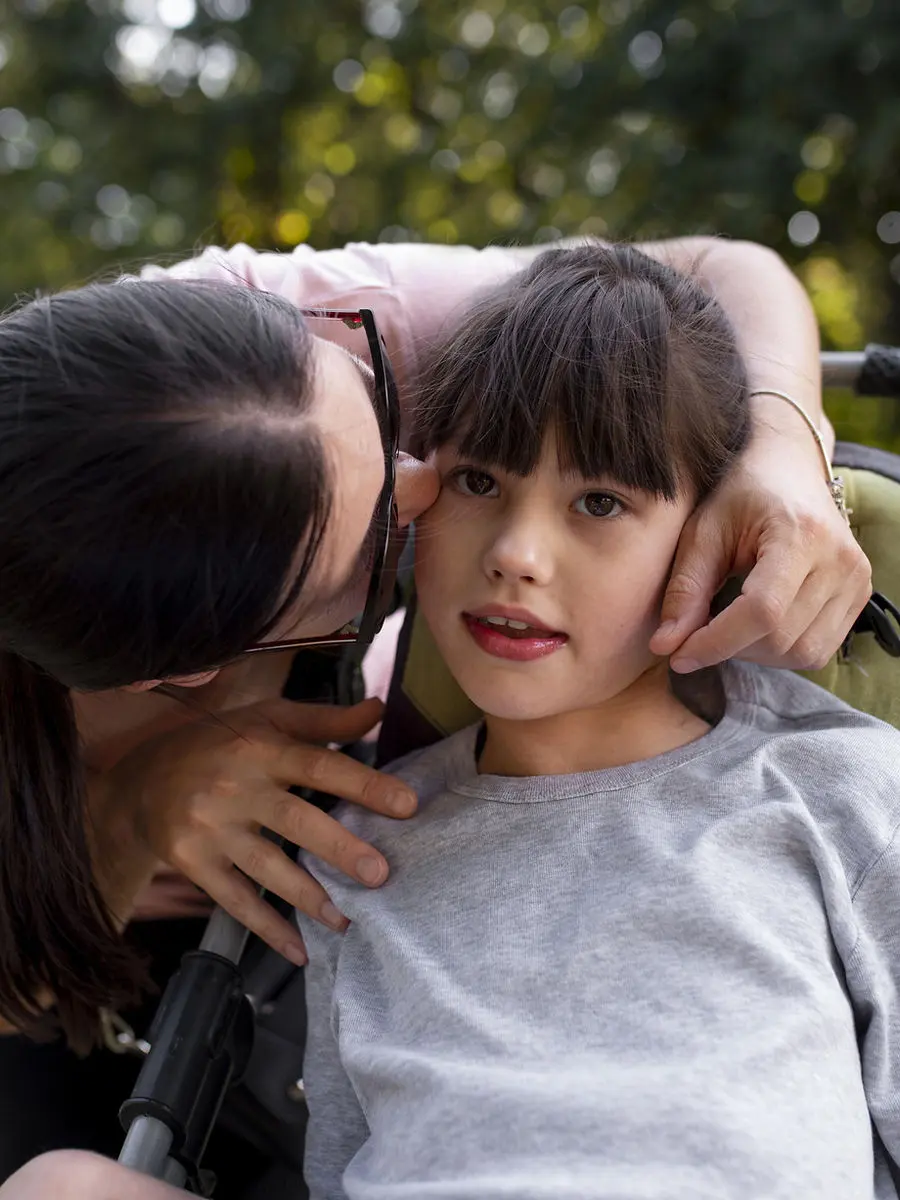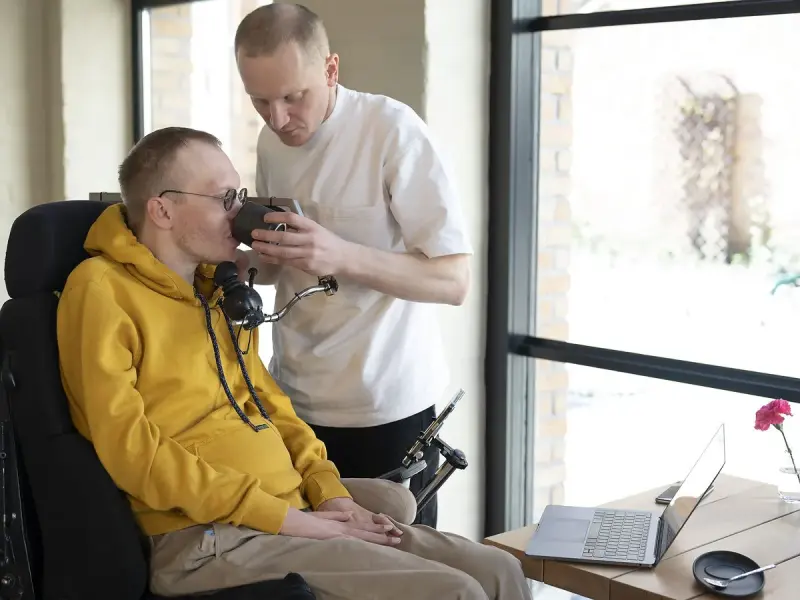

The scene below is an illustrative example, not an account of a specific participant. It's included to show what community participation support can look like in practice.
Tuesday, 3:40pm. The community centre car park is half full. A support worker sits in the passenger seat for a minute longer than she needs to, not checking her phone, just letting the silence sit.
"Same as last week?" she asks.
A nod. Not a word yet — that comes later, usually about ten minutes in, once the noise of the transition has settled.
They walk in through the side entrance, not the main doors. That's not a rule anyone wrote down. It's just what works — fewer people, fewer sounds arriving at once, one thing to adjust to instead of six.
The pottery room is quiet at this hour. Three other regulars, a low hum from the kiln room next door, clay dust in the afternoon light. No one makes a point of saying hello. That's deliberate too — enough acknowledgment to register as normal, not enough to require a response.
Forty minutes in, there's a comment about the glaze colour. Not much — three or four words — but unprompted, and to someone other than the support worker. She doesn't make anything of it. Just answers like it's the most ordinary exchange in the world, because to her, in this room, it is.
By 5pm they're back at the car. The debrief is short: what worked, what felt like too much, whether next week should be the same time or ten minutes later, when the room tends to be even quieter.
Nothing about the afternoon looks remarkable from the outside. That's rather the point.
What Community Participation Support Actually Involves
Support for community participation isn't about filling a calendar with activities. It's about finding the specific conditions — timing, environment, pacing, people — under which someone can actually take part, rather than just be present.
For autistic participants, that often means:
- Predictable structure — the same routine, the same entry point, the same pacing, so energy goes toward the activity rather than toward managing the unfamiliar
- Sensory-aware environments — noise, lighting, and crowd levels considered in advance, not worked around after the fact
- Communication on the participant's terms — verbal, non-verbal, or somewhere in between, without pressure to perform a particular kind of interaction
- Consistency of support worker — familiarity matters here more than almost anywhere else in disability support
- Genuine inclusion, not supervision — the goal is participation, not simply attendance with someone watching on
Why This Matters
Community participation funding under the NDIS exists to support exactly this kind of engagement — helping participants build social connection, pursue interests, and take part in community life in a way that's sustainable for them, not a version of inclusion designed around convenience for everyone else.
Done well, it doesn't look dramatic. It looks like a Tuesday. That's usually the sign it's working.
How Annzac Care Approaches This
We're building our community participation support around the same principle shown above: matching the environment and pace to the person, not the other way around. As we work with participants across the Augustine Heights and Ipswich area, and with their consent, we'll share real examples of what that's looked like. Full service details are on our Community Participation Services page.
This kind of support often sits alongside other services — if daily living or accommodation support is also relevant, see High-Intensity Daily Personal Activities or Individualised Living Options.
If you'd like to talk through what community participation support could look like for your situation, get in touch with Annzac Care — 6 Inigo Way, Augustine Heights QLD 4300.